


Europe and the Roots of Growing Social Discontent
Economic Pressure and Growing Public Dissatisfaction
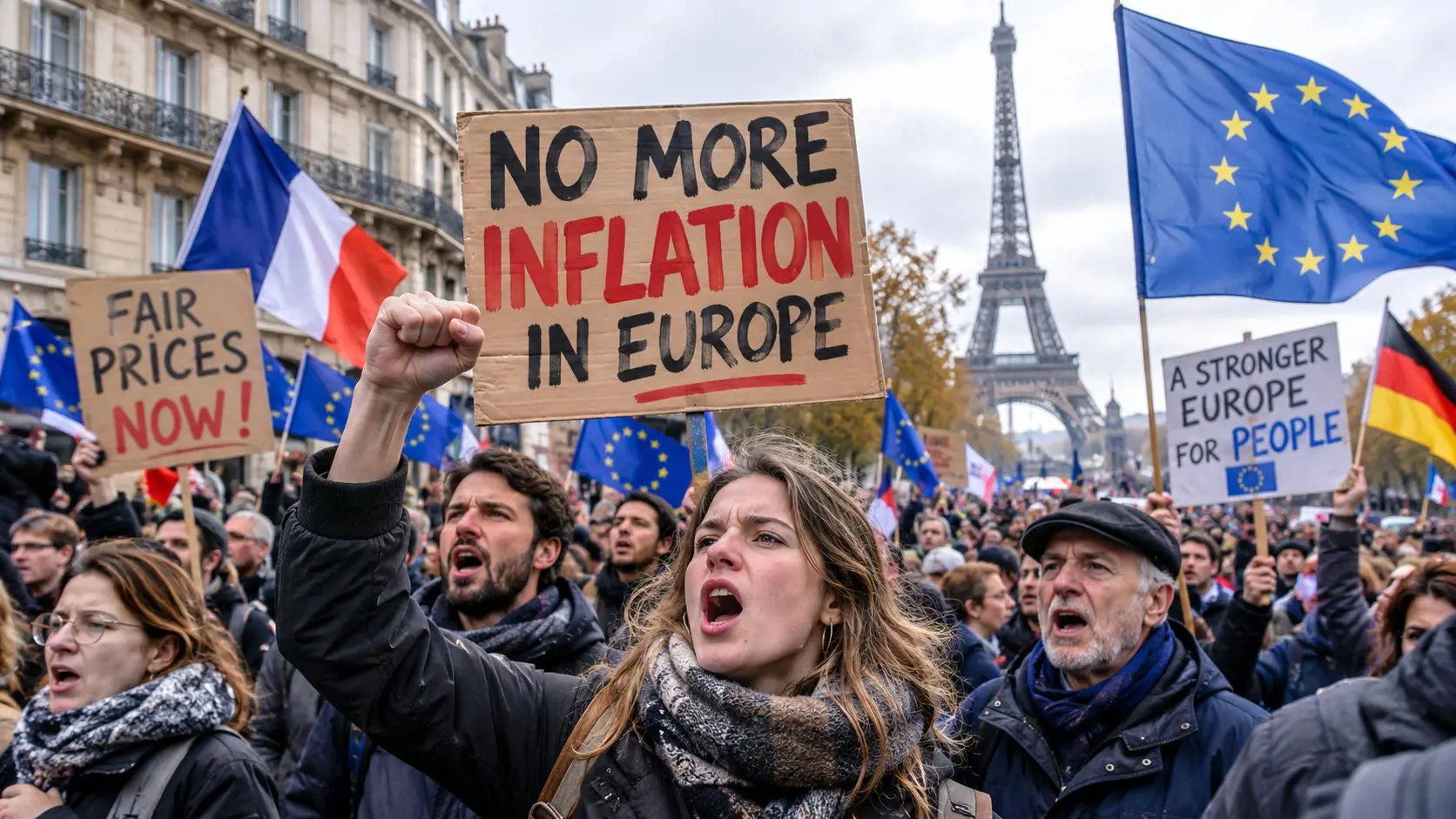
Across the European Union, growing social dissatisfaction is becoming an important economic and political challenge. Demonstrations, public protests and increasing frustration among younger generations reflect deeper concerns about living standards, economic opportunities and the ability of governments to respond effectively to citizens' expectations.
Recent developments indicate that these tensions are not driven by a single issue. Rising living costs, housing affordability, employment insecurity, income inequality and declining confidence in public institutions are increasingly interconnected.
According to Eurofound's 2025 survey, 61% of respondents from low-income households reported difficulties making ends meet, compared with just 9% among high-income households. Meanwhile, the European Commission's Spring 2026 forecast projects EU economic growth of only 1.1% for 2026, reflecting a challenging economic environment.
Housing pressures have added another dimension. High rents and limited affordable housing are particularly affecting young professionals, students and lower-income families. Recent youth-led demonstrations in several European countries have also highlighted concerns about education, employment opportunities and future economic security.
Understanding the Roots of Social Tensions
The current situation reflects a growing gap between economic performance at the national level and the everyday financial experiences of ordinary households.
Although several European economies maintain relatively stable employment markets, many citizens feel that wages, purchasing power and access to essential services have not improved sufficiently to compensate for rising expenses.
Other contributing factors include regional economic disparities, pressure on small businesses, difficulties entering the housing market, demographic challenges and uncertainty surrounding the future of employment.
The consequences extend beyond household finances. Persistent economic dissatisfaction can weaken institutional trust, reduce social participation and increase polarization.
WBO Perspective: Economic Stability Requires Social Confidence
The World Business Organization (WBO) believes that sustainable economic development cannot be achieved without social stability, economic opportunity and public confidence.
WBO considers the current challenges an important opportunity for European governments to reconsider certain economic priorities and develop more practical, inclusive and results-oriented policies.
The Organization emphasizes that economic growth should be measured not only through GDP and investment indicators, but also through improvements in household purchasing power, employment quality, housing affordability and opportunities for younger generations.
WBO's Practical Recommendations for European Governments
WBO proposes a coordinated set of measures adapted to the economic conditions of individual European countries:
1. Protect Household Purchasing Power: Introduce targeted temporary financial support for low-income families, working households and single-parent families, while avoiding broad subsidies that disproportionately benefit higher-income groups.
2. Address the Housing Crisis: Accelerate affordable housing construction, simplify building permits, mobilize unused public land and expand public-private investment partnerships in residential development.
3. Strengthen Employment Opportunities: Establish practical employment and apprenticeship programs for young people, supported by businesses, universities and vocational institutions.
4. Support Small and Medium-Sized Enterprises: Expand access to affordable financing, reduce unnecessary administrative costs and provide incentives for energy efficiency, digitalization and workforce development.
5. Improve Economic Transparency: Introduce regular public reporting on inflation, housing affordability, employment quality and household purchasing power, allowing citizens to evaluate government performance through measurable indicators.
6. Strengthen Social Dialogue: Establish permanent consultation mechanisms involving governments, businesses, workers' organizations, universities and civil society to identify problems before they develop into major social conflicts.
A European Opportunity for Economic Renewal
WBO believes that Europe's current social and economic challenges require coordinated action rather than isolated short-term responses.
Each country must develop solutions according to its fiscal capacity, industrial structure, housing market and demographic conditions. However, cooperation across the European Union can accelerate the exchange of successful policies and strengthen regional economic resilience.
The Organization encourages European governments and the international business community to work together in creating a more inclusive economic environment in which growth translates into tangible improvements in people's lives.
Ultimately, restoring public confidence requires more than economic promises. It requires measurable results, fair economic opportunities and a credible commitment to improving living standards.
For Europe, strengthening the relationship between economic prosperity and social well-being is not simply a policy choice; it is an essential condition for long-term stability and sustainable development.