



Artificial Intelligence Is Reshaping Global Trade: Who Will Benefit from the New Economic Era?
The global economy is entering a new phase in which artificial intelligence, digital infrastructure and technological innovation are increasingly influencing international trade, investment and economic competitiveness.
According to the World Trade Organization’s October 2026 outlook, global merchandise trade is projected to grow by 3.9% in 2026, up from the earlier forecast of 1.9%. Strong demand for AI-related products, including semiconductors and data-centre equipment, has contributed significantly to this improvement, helping offset disruptions caused by geopolitical tensions and higher energy costs.
However, the benefits of this transformation are not distributed equally. Countries with advanced technological infrastructure, skilled workforces and access to investment are better positioned to capture emerging opportunities. Meanwhile, many small and medium-sized enterprises face challenges related to digital adoption, financing, technological expertise and access to international markets.
This changing landscape raises an important question: How can global business cooperation ensure that technological progress creates opportunities across countries and industries, rather than widening existing economic gaps?
The answer requires more than technological investment alone. Businesses need reliable international partnerships, accessible market information, predictable trade conditions and opportunities to collaborate across borders. Governments, private-sector institutions and international business organizations all have a role in creating an environment where innovation can support sustainable economic development.
For the World Business Organization (WBO), this transformation presents an opportunity to strengthen its role as a facilitator of international business cooperation. By connecting business communities, supporting cross-border partnerships, encouraging responsible technological adoption and expanding opportunities for small and medium-sized enterprises, WBO can help businesses navigate the changing global economy.
The organization can also promote dialogue between businesses and policymakers to encourage transparent trade policies, fair market access and more inclusive participation in emerging technology-driven markets.
The future of global trade will not be determined by technology alone, but by how effectively countries and businesses cooperate to turn innovation into shared economic opportunity.
WBO Snapshot | Insight into the trends shaping global business.
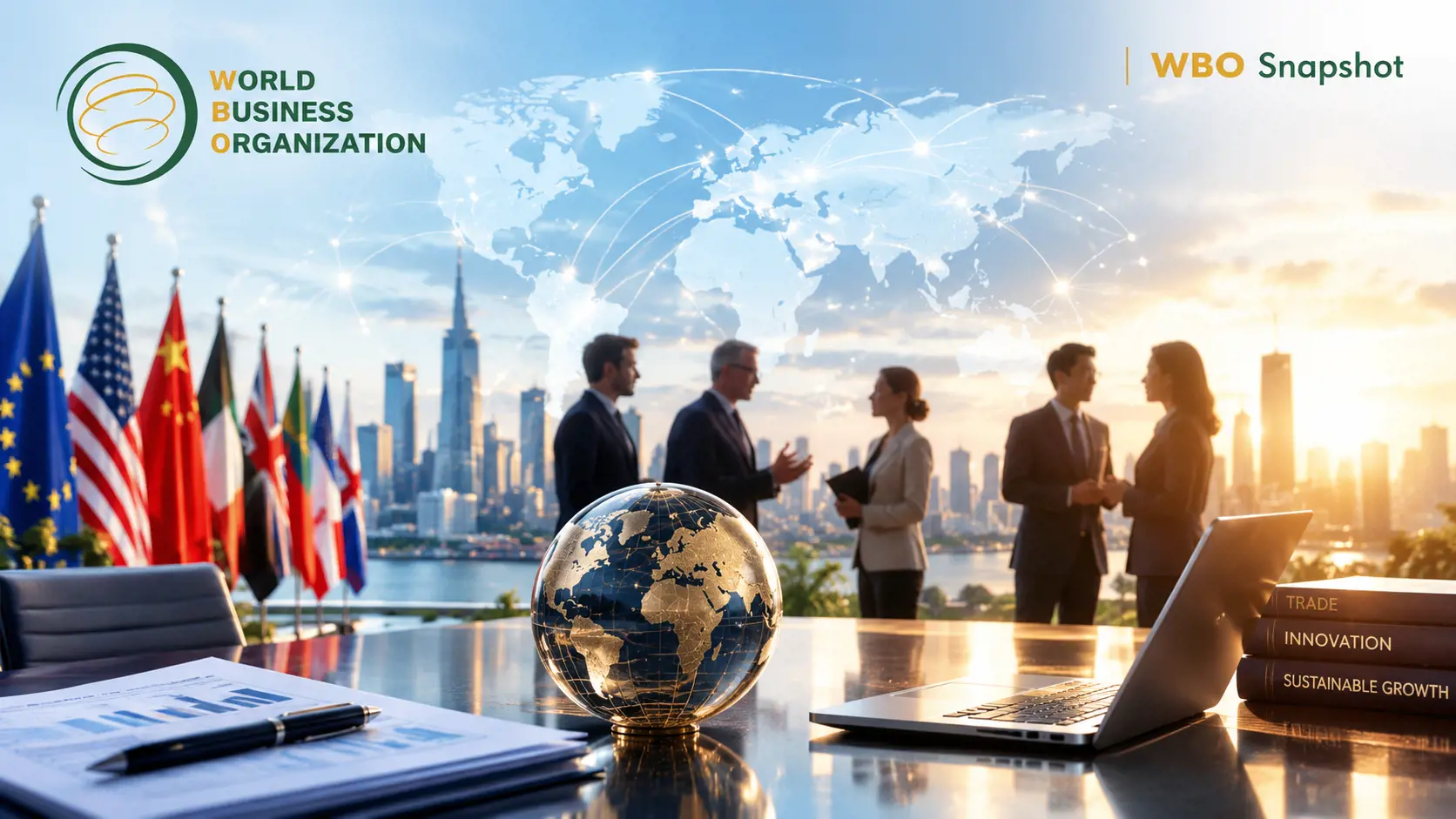
Artificial intelligence is reshaping global trade, creating new opportunities while widening the gap between technologically advanced economies and emerging markets. WBO Snapshot explores how international cooperation, digital innovation, and inclusive business partnerships can help transform technological progress into shared economic growth.
Font Size
1x
Reading time: 2 min