




Global Business Enters a New Era: Artificial Intelligence Drives Growth Amid Geopolitical Uncertainty
The international business environment is undergoing a significant transformation as companies adapt to technological disruption, trade policy uncertainty and changing patterns of global investment. While geopolitical tensions and economic fragmentation continue to create challenges, new opportunities are emerging in artificial intelligence, advanced manufacturing, digital services and regional trade cooperation.
One of the most significant developments is the growing influence of artificial intelligence on international commerce. According to the latest DHL Globalization Tracker, released in October 2026 in collaboration with researchers at New York University’s Stern School of Business, globalisation has reached a record level, with AI-related investment and demand providing substantial momentum for international trade. Global goods trade expanded strongly during the first half of the year, demonstrating that commercial integration can continue even amid tariffs and geopolitical uncertainty.
Companies Rethink International Expansion
Multinational companies are increasingly reconsidering where they manufacture products, source raw materials and establish distribution networks. Rather than relying exclusively on the lowest-cost suppliers, businesses are placing greater emphasis on supply chain resilience, market diversification and access to strategically important technologies.
These changes are creating opportunities for emerging economies capable of offering reliable infrastructure, competitive production costs, skilled workers and predictable regulatory environments. Countries in East and Southeast Asia continue to benefit from their integration into manufacturing networks, while other developing markets are seeking to attract investment by strengthening regional commercial partnerships.
However, the benefits of this transformation remain uneven. The United Nations Conference on Trade and Development estimates that global economic growth will slow to 2.6% in 2026, even as international trade in goods and services is projected to expand by approximately 4% in real terms.
Geopolitical Risks Reshape Business Decisions
Political tensions are also becoming a central consideration in corporate planning. Recent assessments by the World Trade Organization indicate that conflicts in the Middle East and Ukraine, alongside tariff disputes, are influencing trade routes and international sourcing decisions. Businesses are increasingly diversifying suppliers and considering alternative markets to reduce their exposure to regional disruptions.
For international companies, these developments increase the importance of risk assessment, transparent contractual arrangements and reliable commercial intelligence. Smaller businesses may face particular difficulties because they have fewer financial resources to absorb sudden increases in transportation, energy and compliance costs.
The Next Competitive Advantage
The next phase of global business will depend not only on technological innovation or access to capital, but also on the ability to establish trustworthy international partnerships. Companies that combine digital capabilities with effective risk management, responsible business practices and diversified market access may be better positioned to navigate uncertainty.
Ultimately, the future of global commerce will depend on whether businesses and international institutions can translate technological progress into broader economic opportunity. In an increasingly interconnected yet fragmented world, trust, adaptability and cooperation are becoming essential foundations of sustainable international business growth.
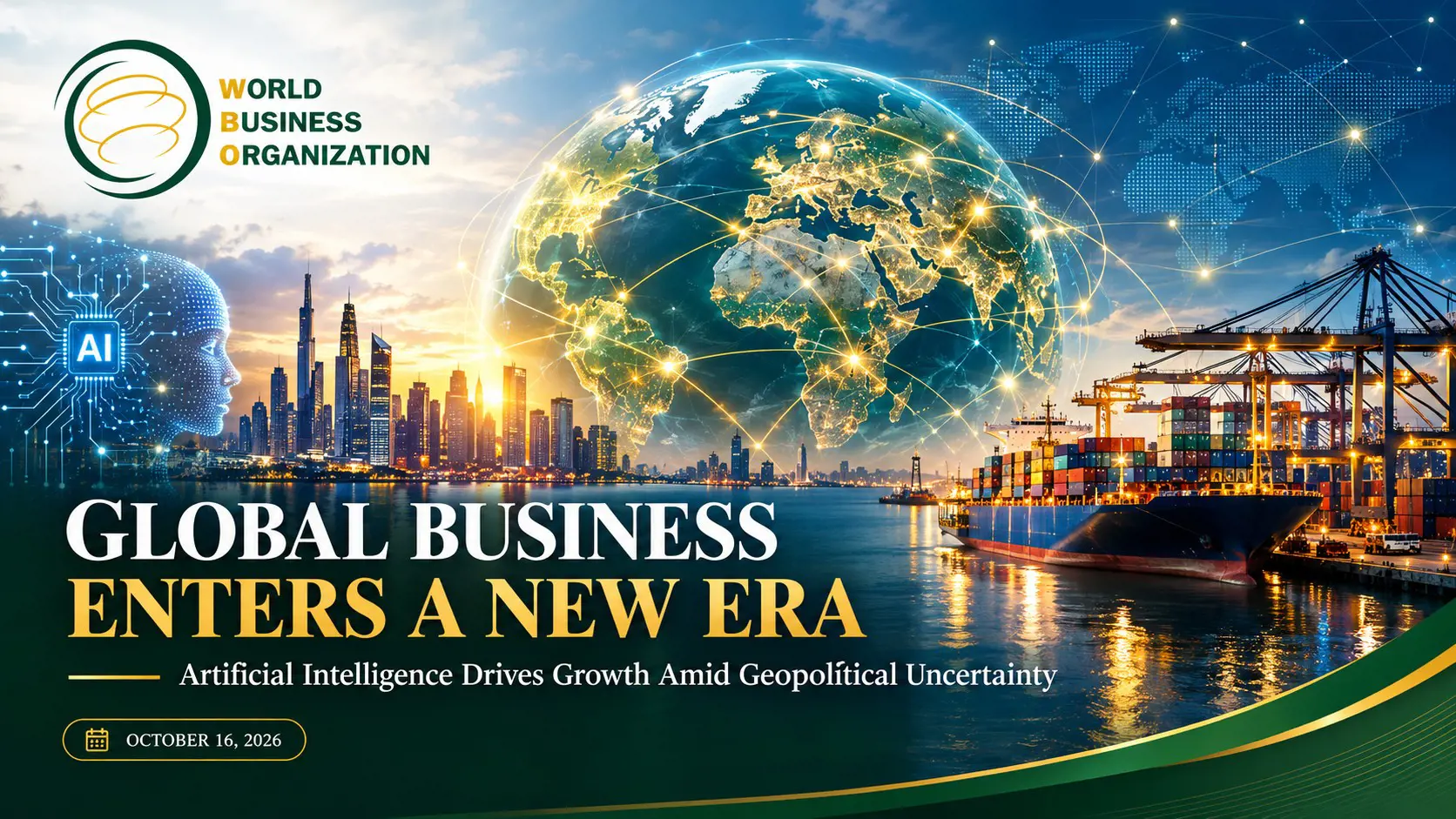
Global businesses are navigating a rapidly changing economic landscape in which artificial intelligence, shifting supply chains and geopolitical tensions are redefining international trade, investment and corporate strategy.
Font Size
1x
Reading time: 3 min