



WTO Warns of Lasting Transformation in Global Trade as Geopolitical Conflicts Reshape Supply Chains
GENEVA, October 16, 2026 — Global trade is entering a period of structural transformation as geopolitical conflicts, regional instability, and growing uncertainty over international economic relations force governments and businesses to reconsider established supply chains and commercial strategies. The World Trade Organization (WTO) has warned that the consequences of the wars in Ukraine and the Middle East are likely to extend well beyond the duration of the conflicts themselves, potentially reshaping international trade flows for years to come.
Speaking to Reuters on October 15, WTO Director-General Ngozi Okonjo-Iweala highlighted the significant contraction in Middle Eastern trade associated with the Iran war, warning that recovery could take time even after hostilities end and shipping conditions improve. According to the WTO's assessment cited in the report, regional exports are projected to decline by 17% this year, while imports are expected to fall by approximately 15%. These figures illustrate the extent to which geopolitical instability can disrupt commercial activity across entire regions.
The disruption is also accelerating a broader reassessment of global supply-chain resilience. Businesses that traditionally prioritized cost efficiency and just-in-time delivery are increasingly evaluating alternative transportation corridors, additional suppliers, regional production networks, and contingency arrangements. Although these measures can increase short-term operating costs, they may reduce exposure to sudden border closures, shipping interruptions, sanctions, and other geopolitical shocks.
The strategic implications extend beyond transportation and logistics. Persistent uncertainty can influence investment decisions, commodity prices, insurance premiums, working-capital requirements, and the location of future manufacturing facilities. Companies operating across several jurisdictions must increasingly assess not only commercial opportunities but also geopolitical exposure, regulatory divergence, and the reliability of critical trade routes.
Despite these pressures, the outlook for global merchandise trade is not uniformly negative. The WTO recently upgraded its forecast for merchandise trade volume growth in 2026 to 3.9%, compared with its earlier baseline projection of 1.9%. Strong demand for artificial intelligence-related products has helped offset some of the negative effects of geopolitical disruption, although the organization cautions that this technological boom may conceal underlying weaknesses in the wider trading environment.
The changing landscape is also strengthening the case for regional trade cooperation and greater diversification. Okonjo-Iweala pointed to the potential of stronger intra-African commerce, which currently represents approximately 20% of Africa's trade, compared with around 60% of trade occurring within the European Union. Expanding regional commercial networks could create new opportunities for industrial development, employment, and market integration.
The central message for international business is clear: resilience is becoming as important as efficiency. Companies and governments that develop diversified supply chains, strengthen regional partnerships, and improve their capacity to anticipate disruptions may be better positioned to compete in an increasingly fragmented global economy. The challenge for the international trading system will be to accommodate legitimate security and resilience concerns without allowing geopolitical rivalry to undermine the predictability and openness on which sustainable global commerce depends.
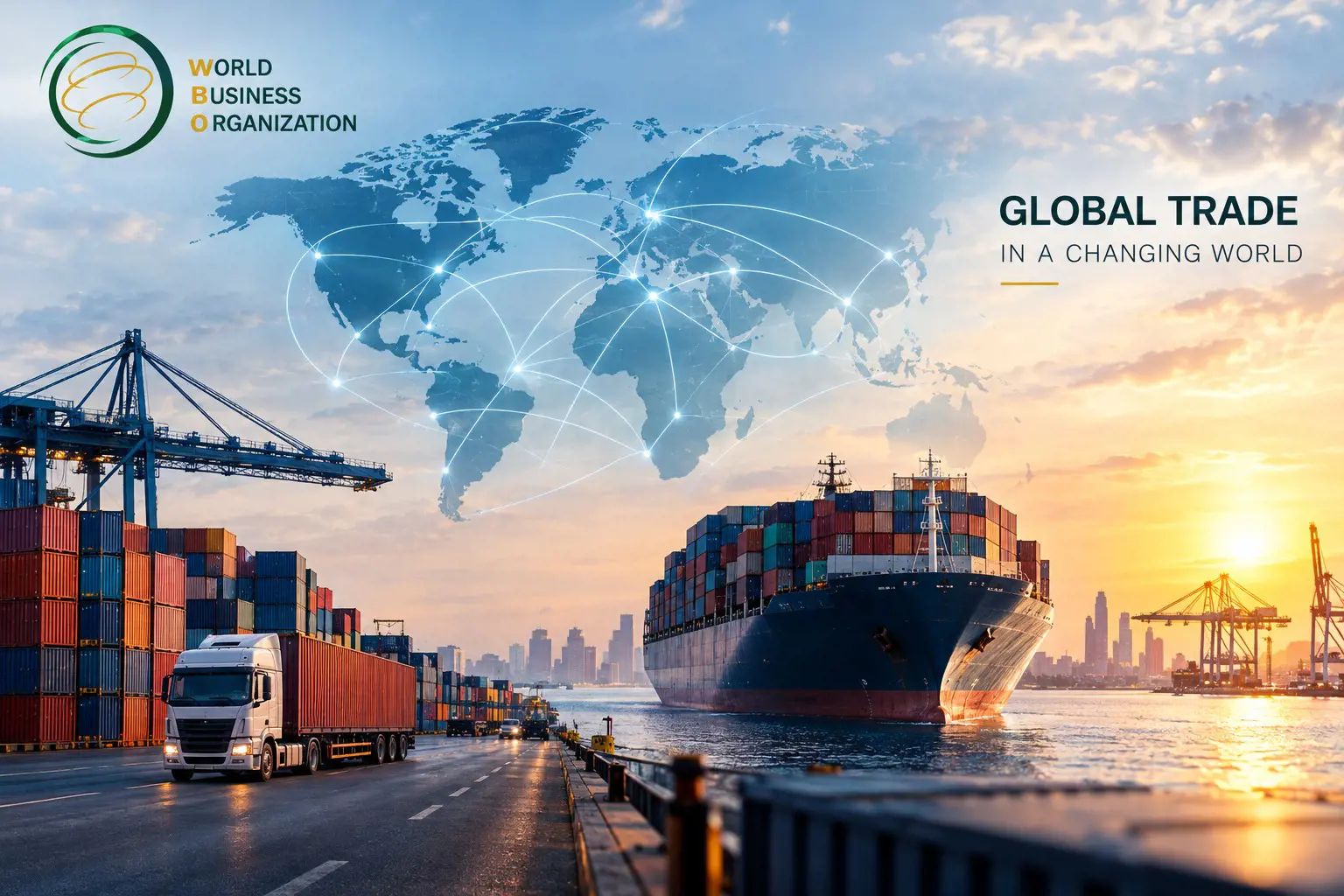
The World Trade Organization warns that conflicts in the Middle East and Ukraine are reshaping global trade routes, disrupting regional commerce, and accelerating corporate efforts to diversify supply chains, even as artificial intelligence-related demand supports international trade growth.
Font Size
1x
Reading time: 3 min