


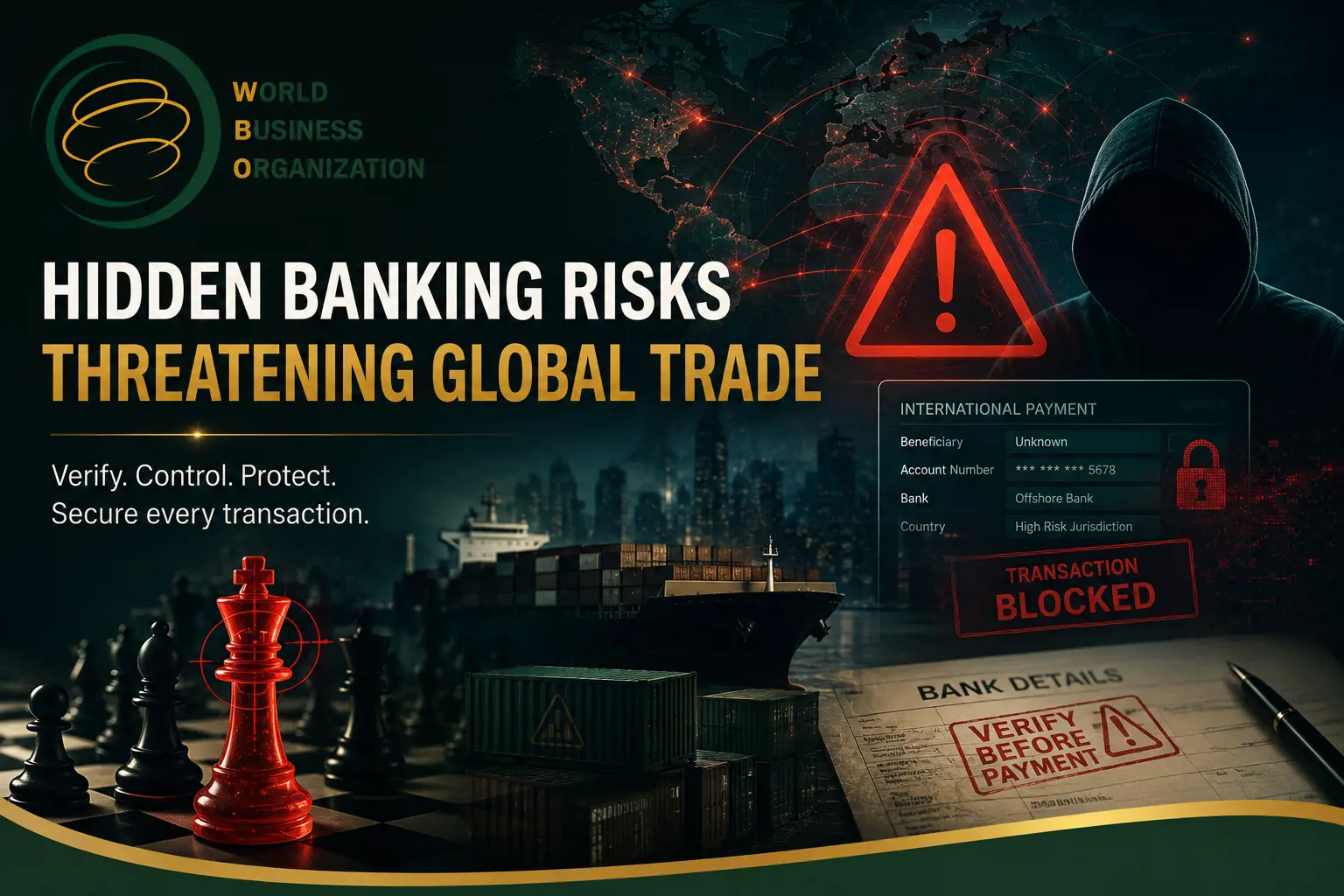
Threats Lurking: Banking Transaction Risks in International Trade
In international trade, a bank transfer is more than a payment mechanism—it is a critical point of exposure to fraud, sanctions risk, financial crime, compliance intervention, and operational failure. A transaction may be commercially legitimate and still face rejection, delay, enhanced due diligence, or fund restrictions because of inconsistencies involving the beneficiary, jurisdiction, ownership structure, transaction purpose, or banking chain.
One of the most serious threats is Business Email Compromise (BEC), where criminals impersonate suppliers, executives, or intermediaries and redirect legitimate payments to fraudulent accounts. Equally important are unexplained third-party payments, sudden changes in beneficiary accounts, and transactions involving complex or unclear ownership structures.
Professional international businesses should therefore assess the entire transaction chain, not simply verify the bank account number.
Key Executive Controls
- Independently verify any change in bank details. Never rely solely on the email or message requesting the change.
- Match the beneficiary with the contractual party. Third-party payments require documented commercial justification.
- Verify beneficial ownership. Know who ultimately owns and controls the entities involved.
- Screen relevant parties and jurisdictions. Consider sanctions, AML, KYC, and correspondent-banking exposure.
- Match payment documentation. Contract, invoice, beneficiary, currency, amount, goods/services, and shipping information should be commercially consistent.
- Apply dual authorization to high-value payments. Segregation of duties reduces both internal and external fraud risk.
- Treat unusual urgency as a red flag. Pressure to bypass normal controls should trigger enhanced verification.
- Maintain a documented audit trail. Every material payment should be supported by sufficient commercial and compliance documentation.
The Rule for International Traders
Change in payment instructions = STOP + VERIFY + INDEPENDENT CONFIRMATION
Trust remains fundamental to international commerce, but trust cannot replace transaction controls. The professional trader does not ask only, “Do I know this company?” The critical questions are: Who ultimately receives the money? Why? Under what commercial structure? And can the transaction be independently verified?
In global trade, effective risk management begins before the payment is authorized—not after the funds have left the account.
Threats Lurking | WBO Times
A practical series examining hidden risks in international business and providing actionable risk-control measures for traders, companies, and business executives.